martes, 23 de septiembre de 2014

Curso 2014--2015, lecturas optativas de Psicología


Empezamos un nuevo curso con dos grupos de alumnos de Psicología y con materias del Departamento de Filosofía en inglés: Ethics and Citizenship.

Como algunos alumnos se han interesado por las lecturas optativas de la materia de Psicología, actualizo la lista de libros. Comentaré estos títulos en clase y también podeis preguntarme por cualquiera que os interese.

Tras la lectura del libro los alumnos deberán realizar un breve trabajo que incluya:

1. Tema.

2. Aspectos del libro relacionados con la materia. Temas como el amor, odio, búsqueda de la identidad personal, enfermedades mentales, relaciones y conflictos personales, sueños, ambiciones, inteligencia…pueden aparecer en la obra y, por tanto, deberá realizarse una reflexión sobre todos aquellos que aparezcan.
3. Conclusión. Puede ser una opinión personal argumentada en la que se pueden incluir aspectos como los siguientes.
- partes o asuntos interesantes.
- dificultad de la obra.
- interés del tema.
- relación con otras obras, películas… que se conozcan sobre el mismo tema o parecido.
- originalidad.
- aportaciones que el libro ha podido ofrecer al lector.
- otros aspectos.

 MUY IMPORTANTE : el trabajo debe incluir citas que avalen y ejemplifiquen las afirmaciones o reflexiones. Se citará siguiendo los criterios que la profesora ha indicado en clase. No es necesario buscar información adicional, pero en caso de hacerse debe indicarse en la bibliografía.

LIBROS LECTURA PSICOLOGIA

Obras de psicología y divulgación (se puede leer uno o  varios capítulos)

- Oliver Sacks: El hombre que confundió a su mujer con un sombrero.
Musicofilia.
Un antropólogo en Marte.
- Flora Davis: La comunicación no verbal.
- Freud : La interpretación de los sueños
El chiste y su relación con el inconsciente
Autobiografía
Introducción al psicoanálisis
- Mora, Francisco: Cómo funciona el cerebro.
Genios, locos y perversos: cerebro, enfermedad mental y diversidad humana.
- Slater, L: Cuerdos entre locos.
- Punset, E: El alma está en el cerebro.
Viaje a las emociones, 
Porque somos como somos.
Excusas para no pensar.
El viaje a la felicidad.
- Goleman: Inteligencia emocional.
Focus.
  Csikszentmihaly, M : Fluir: una psicología de la felicidad.


-Dyer: Tus zonas erróneas.
-Rojas: La conquista de la voluntad
Remedios para el desamor.
-Varios: Psicología para principiantes.
Freud para principiantes.

Novelas:

- Sábato: El túnel.
- Wilde: El retrato de Dorian Grey.
- Du Maurier. Rebeca.
- Bronte, C: Jane Eyre.
- Bronte, E: Cumbres Borrascosas.
- Salinger: El guardian entre el centeno.
- Shelley: Frankenstein.
- Stevenson: Dr. Jeckill y Mr. Hyde.
- Hesse: Sidharta, El lobo estepario, Demian.
- James: Otra vuelta de tuerca.
- Suskind: El perfume.
- Sccot-Card: El juego de Ender.
- Auster: El país de las últimas cosas.
- Borges: El Aleph o cualquier antología de cuentos.
- Katzenbach: El Psicoanalista.
- Katzenbach: Historia del loco.
- Luca de Tena, T: Los renglones torcidos de Dios.
- Mc. Carthy: La carretera.
-Haddon, M: El curioso incidente del perro a medianoche.
- Chbosky, S: Las ventajas de ser un marginado.
-Green, J: Bajo la misma estrella.

lunes, 28 de abril de 2014

2º ESO The Elephant Man papers

Here you'll find some of the papers about The Elephant Man book from my bilingual students.


 Some of them are really outstanding and the rest are great too.


 Congratulations! Thanks a lot for your interest and keep up the good work!

martes, 22 de abril de 2014

ETHICS 4º ESO The Diary of a Young Girl


In Ethics (4º ESO) you should finish the book The Diary of a Young Girl and answer questions 41, 43 and 46.
To have a good mark, you must explain your answers using a wide range of vocabulary, expanding your ideas and including everything that you consider important to complete the task. For example, in question  43, you  can desing your own newspaper page in order to support your answer.

Deadline:
4ºA:   Tuesday, 29th April
4ºB. Wednesday, 30st April

jueves, 10 de abril de 2014

PSICOLOGIA TRABAJOS OPTATIVOS


 Aquellos alumnos que deseen realizar actividades optativas en la materia de Psicología pueden:
-Ampliar información sobre alguno de los trastornos mentales que estamos tratando en clase, por ejemplo la depresión, la esquizofrenia, autismo...
 La forma de presentación puede ser elegida entre:
- escrito y entregármelo en clase.
-escribirlo en un documento de word y mandarlo al blog como comentario en esta misma entrada.
-realizar un power point, elegir un video comentado y mandarlo también aquí.
 No hay que olvidar incluir las referencias sobre la información.
Ah, estas actividades pueden hacerse también en parejas o en grupos de tres.


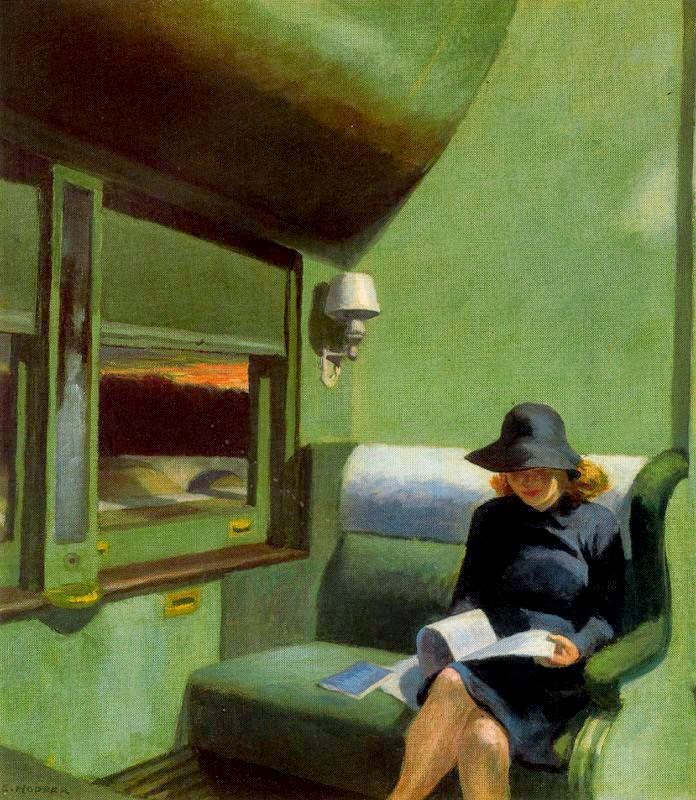
  Cuadros: Autómata y Compartimento C, coche 193 de E: Hooper.

martes, 18 de marzo de 2014

This is England

This Is England: a portray of the transition between childhood and adulthood.

This is England is the story of a summertime school holiday.Those long weeks between terms where life-changing events can take place. It’s 1983 and school is out. Twelve-year-old Shaun is an isolated boy growing up in a grim coastal town, whose father has died fighting in the Falklands War.

Over the course of the summer holiday he finds male role models when those in the local skinhead scene take him in. With his new friends Shaun discovers a world of parties, first love and the joys of Dr Marten boots. Here he meets Combo, an older racist skinhead who has recently got out of prison. As Combo’s gang harass the local ethnic minorities, the course is set for a rite of passage that will hurl Shaun from innocence to experience.

(Filmeducation.org)


To understand the social background of the story you must pay attention to the opening sequence. It is important in representing the social, historical and cultural context of the film (the early 80's).

The sequence moves from trivial clips of Roland rat, Space Invaders -the first computer game- hairs styles of the the ‘new romantic’ group Duran Duran, the wedding of Charles and Diana, then this becomes increasingly serious with anti US air base protests, the miners strike, a National Front March, and race riots. The sequence ends with news clips from the Falklands/Malvinas war showing injured soldiers. Tory Prime Minister Margaret Thatcher is a constant presence throughout.

Words that are underlined are relevant for the vocabulary of our last term.
Leave me your comments about the movie!

miércoles, 26 de febrero de 2014

Globalisation videos. Citizenship unit 4

Unit 4: Globalisation. 
To understand what globalisation means, here we have some videos about it. 
Firstly, you must write down the advantages and disadvantages of this process in two different columns.


Secondly, you should listen to these videos carefully to get some ideas about our global world.


lunes, 17 de febrero de 2014

Ethics and Citizenship - 2nd TERM DATES-

 ETHICS


-4th March (4ºA) and 5th March (4ºB): Exam of unit 3. Review  vocabulary,  ideas, readings, dilemmas and Steve Jobs video.


CITIZENSHIP 
 -27 February: Deadline for handing in the portfolio about the Elephant Man.

- 6Th March.:exam of unit 3 and unit 4 (globalisation). Review vocabulary, ideas, videos, Elephant Man reading.

lunes, 3 de febrero de 2014

Ethics Unit 3 Activities. Our life path

 In this unit we are learning what ethics is.  One of the  ideas is the fact that we must always choose and, sometimes, we should cope with  hard situations called moral dilemmas.

We have read that even every little decision builds our life path.

Here, we have a speech by Steve Jobs in Stanford University. Listen to it carefully, copy and answer the questions below.

1 When did his life begin?

2 What does the first story teach us about our life?

3 The second story is about love and loss. What did he find and what did he lose?

4  What does "don't lose faith" mean? How can we be satisfied with our jobs?

6 Explain this expression using your own words : "Don't settle"

7 Regarding the last story, why does he say that Death is the single best invention on life?

8 What does he want to mean with the final sentence: Stay hungry, stay foolish.


Here is the same video with Spanish subtitles.

martes, 14 de enero de 2014

The unexamined life is not worth living. 4º ESO

 Now we are learning what ethics is by  using Socrates life as an introduction to unit 3. For those who want to do an extra or optional actvity, I suggest this one:

 "The unexamined life is not worth living" is a Socrates famous sentence. Write eight questions that you use to examine your life like:
- What kind of person I would like to be?
- What are my ethical values?
- What is the purpose of my entire life?

 You can give me the task in a separate piece of paper.


jueves, 19 de diciembre de 2013

Yes, Virginia there is a Santa Claus

Se acaba este primer trimestre un tanto ajetreado y complejo. Os dejo algunas recomendaciones para estas fiestas:

En 2º de Bachillerato, descansad para volver con fuerzas al segundo trimestre en el cual nos esperan Descartes, Hume y Kant.
En Psicología hay que ir contestando a las preguntas sobre la película que vimos en clase.
Students from the bilingual program:
-2º ESO: you must start to read The Elephant Man, I will give you the guidelines for the portfolio after holidays.
-4ESO: an optional task that consists on explaining the underlined sentence of the reading Yes, Virginia there is a Santa Claus ( we didn´t finish the reading in 4º B and we couldn´t read it in 4º A)

 Para todos esta maravillosa carta sobre Santa Claus. Consiste en la respuesta que el periódico New York´s Sun  publicó en 1897 a la pregunta de una niña de 8 años sobre la exitencia de Santa Claus. Constituye una de las editoriales periodísticas más repetidas en libros, películas, posters...


"DEAR EDITOR: I am 8 years old. 

Some of my little friends say there is no Santa Claus.
"Papa says, 'If you see it in THE SUN it's so.'
"Please tell me the truth; is there a Santa Claus?


VIRGINIA O'HANLON.
"115 WEST NINETY-FIFTH STREET."


"VIRGINIA, your little friends are wrong. They have been affected by the skepticism of a skeptical age. They do not believe except [what] they see. They think that nothing can be which is not comprehensible by their little minds. All minds, Virginia, whether they be men's or children's, are little. In this great universe of ours man is a mere insect, an ant, in his intellect, as compared with the boundless world about him, as measured by the intelligence capable of grasping the whole of truth and knowledge.
Yes, VIRGINIA, there is a Santa Claus. He exists as certainly as love and generosity and devotion exist, and you know that they abound and give to your life its highest beauty and joy. Alas! how dreary would be the world if there were no Santa Claus. It would be as dreary as if there were no VIRGINIAS. There would be no childlike faith then, no poetry, no romance to make tolerable this existence. We should have no enjoyment, except in sense and sight. The eternal light with which childhood fills the world would be extinguished.
Not believe in Santa Claus! You might as well not believe in fairies! You might get your papa to hire men to watch in all the chimneys on Christmas Eve to catch Santa Claus, but even if they did not see Santa Claus coming down, what would that prove? Nobody sees Santa Claus, but that is no sign that there is no Santa Claus. The most real things in the world are those that neither children nor men can see. Did you ever see fairies dancing on the lawn? Of course not, but that's no proof that they are not there. Nobody can conceive or imagine all the wonders there are unseen and unseeable in the world.
You may tear apart the baby's rattle and see what makes the noise inside, but there is a veil covering the unseen world which not the strongest man, nor even the united strength of all the strongest men that ever lived, could tear apart. Only faith, fancy, poetry, love, romance, can push aside that curtain and view and picture the supernal beauty and glory beyond. Is it all real? Ah, VIRGINIA, in all this world there is nothing else real and abiding.
No Santa Claus! Thank God! he lives, and he lives forever. A thousand years from now, Virginia, nay, ten times ten thousand years from now, he will continue to make glad the heart of childhood."


CONSEJOS EXAMEN HISTORIA DE LA FILOSOFIA

  Para los alumnos de  Historia de la Filosofía de 2º de Bachillerato  dejo algunos  consejos que pueden ser útiles de cara al examen de Se...

Datos personales

Blog del Departamento de Filosofía del IES Gabriela Mistral. c/ Miguel de Cervantes, 104. 28939 Arroyomolinos Madrid Tel: 91 689 90 54 Fax: 91 689 77 13.

Páginas