Mostrando entradas con la etiqueta eso. Mostrar todas las entradas

miércoles, 2 de octubre de 2024

VALORES ETICOS 2 ESO LA AUTOESTIMA

 En clase de Valores estamos tratando la identidad personal. Relacionado con ello hemos hablado de la autonomía, la felicidad y la autoestima. 

La tarea a realizar sobre la autoestima es la siguiente:

 con el video y  las fotos que aparecen más abajo diseña un cartel, parecido a los anteriores con 5 consejos para mejorar la autoestima.


LOS FILOSOFOS GRIEGOS 4 ESO

 LOS FILOSOFOS GRIEGOS. TAREA

1-Elegir uno de estos filósofos o eescuela: 

LA ESCUELA DE MILETO                    ANAXÁGORAS

HERÁCLITO                                            EMPEDOCLES

LOS ATOMISTAS                                    LOS PITAGÓRICOS

LOS SOFISTAS                                       SOCRATES   

PLATON                                                  ARISTÓTELES

LOS ESTOICOS                                      LOS EPICUREOS


2- Buscar información sobre su vida y sobre sus ideas filosóficas.

3- Hacer un dibujo relacionado con la filosofía del autor.


lunes, 5 de febrero de 2024

INTELIGENCIA ARTIFICIAL 4º ESO

 En 4º ESO vamos a trabajar el tema de la inteligencia artificial, es decir, si una máquina puede pensar.

Hablaremos brevemente de la vida y de las aportaciones  de A.M. Turing. También de las máquinas que nos rodean, de los robots...

 Como trabajo optativo para subir nota propongo realizar una exposición en clase sobre uno de estos temas:

- Turing y la Segunda Guerra Mundial.

- Japón: una sociedad tecnológicamente avanzada.

- Japón : robots en la vida cotidiana.

- Películas o series que traten el tema de la relación máquinas- humanos en el futuro.


lunes, 20 de febrero de 2023

 Preguntas sobre el video de S. Jobs.


1- Comenta lo que ocurrió con sus padres.
2 -¿Qué quiere decir la expresión " unir los puntos"?
3-¿Qué enseña la primera historia sobre la vida?
4- La segunda historia trata del amor y de la pérdida, ¿qué encontró y que perdió?
5-¿Qué constituye lo más relevante acerca de aquello que hacemos?
6- Explica la expresión" Don´t settle"
7- En la tercera historia se afirma que la muerte es la mejor invención en la vida, ¿qué significa?
8 -¿Qué crees que significa la última expresión "Stay hungry,  stay foolish"?
9- ¿Qué crees que respondería el autor si le preguntaran en qué consiste la felicidad para él?

10- Relaciona este video con lo aprendido en clase sobre el ikigai?


miércoles, 23 de marzo de 2022

VALORES ETICOS 4 ESO , TRABAJO OPTATIVO

Algunos alumnos de 4 de la materia de Valores Eticos van a realizar trabajos optativos. Dejo aquí propuestas relacionados con temas tratados durante el curso y unas orientaciones sobre lo que hay que hacer.


-El transhumanismo.

-Autonomía y Heteronomía: la historía de Ana Frank.

- El desarrollo moral: Kolberg.

-La felicidad: algunas tendencias actuales como el hygge, lagoon, ikigai...

-El estoicismo como forma de ser feliz o cualquier otra teoría ética que tratamos en clase (Aristóteles, Epicuresimo, Utilitarismo, la ética de Kant...)

- La búsqueda de la felicidad como tema del cine y la literatura.

- La felicidad: personas tóxicas y personas vitamina.

-Problemas éticos relacionados con el desarrollo tecnológico.

-La historia de los Derechos Humanos.


El trabajo consistirá en una exposición oral sobre los temas. En ella se realizará una introducción o presentación del tema elegido, un desarrollo en el que se expongan los puntos relevantes y una conclusión.


martes, 8 de febrero de 2022

VALORES ETICOS 4 ESO LA FELICIDAD


¿Se puede aprender a ser feliz? Vamos a escuchar lo que dice M. Rojas y contestaremos a las preguntas de la ficha:

la felicidad 

miércoles, 19 de enero de 2022

BLACK MIRROR: CROCODILE

 En Valores Eticos de 4º nos encontramos tratando algunos  dilemas morales. A propósito de ello hemos visto el episodio Crocodile de la serie Black Mirror.  Algunas de las cuestiones a tratar podrían ser las siguientes:

LA MUERTE

-¿qué debería haber hecho la pareja protagonista al comienzo del episodio? 

-¿tiene sentido que uno de ellos quiera resarcirse de lo ocurrido 15 años después?

-¿cómo superar la culpa?

LOS RECUERDOS

-¿son solo recuerdos o van cargados de emociones?Ejs

-¿ es ético reproducir los recuerdos que es algo íntimo y personal para resarcir a las víctimas de accidentes?

-¿podría llegar a ser un requisito legal?

- ¿tendría entonces que preservarse la identidad de las personas y de aquellos recuerdos que no tuvieran relación con el hecho?

LA RESPONSABILIDAD SUBJETIVA

-¿hasta donde podríamos llegar para mantener un modelo de vida?

-¿seríamos capaces de cometer actos inmorales?

LA TECNOLOGIA

-¿qué dispositivos tecnológicos aparecen? 


Black Mirror: Cocodrilo (TV) (2017) - Filmaffinity

viernes, 10 de diciembre de 2021

BLACK MIRROR: ARKANGEL

 Las preguntas que hay que contestar sobre ARKANGEL son las siguientes:

1- Breve resumen del capítulo.

2-¿Por qué se suscribe la madre al programa Arkangel? ¿Por qué se llama así el programa?

3- .¿Cómo controla la madre a la hija cuando es pequeña?

4- ¿Por qué acude al psicólogo?

5- ¿Por qué vuelve a usar el dispositivo cuando es mayor? 

6- ¿Qué opinas de su forma de controlar? Reflexiona sobre este aspecto en relación con la libertad de la hija.

7- En la sociedad actual es muy facil introducirse en la intimidad de las personas, pon ejemplos de esto y reflexiona  sobre hasta que punto puede ser algo negativo para los individuos. 

8- ¿Crees que en el futuro existirán programas del tipo Arkangel? ¿con que finalidad?

9- ¿Hasta dónde llega el derecho de los padres sobre la vida y la intimidad de sus hijos?

10-Escribe un párrafo explicando las implicaciones éticas del episodio, la relación con la sociedad actual...


Por qué no deberías sobreproteger a tus hijosArkangel | Black Mirror Wiki | Fandom 


viernes, 29 de octubre de 2021

Hemos visto en clase la película La Ola para terminar el primer tema de Valores Eticos de 4 ESO. Esta película se inspira en el experimento La Tercera Ola sobre el que os dejo esta información de la wikipedia.

La Tercera Ola fue un experimento para demostrar que incluso las sociedades libres y abiertas no son inmunes al atractivo de ideologías autoritarias y dictatoriales, realizado por el profesor de historia Ron Jones en el marco de su estudio sobre la Alemania nazi con alumnos de secundaria1​2​ al convencer a sus estudiantes de que el movimiento eliminaría la democracia. El hecho de que la democracia enfatizara el individualismo se consideró un defecto de la democracia, y Jones hizo hincapié en ello a través de su lema "Fuerza mediante la disciplina, fuerza mediante la comunidad, fuerza a través de la acción, fuerza a través del orgullo".

El experimento se llevó a cabo en el Cubberley High School, un instituto de Palo Alto, California, durante la primera semana de abril de 1967.3​ Jones, al no poder explicar a sus alumnos por qué los ciudadanos alemanes, especialmente los no judíos permitieron que el partido nazi exterminara a millones de judíos y otros llamados "indeseables", decidió mostrárselo. Jones escribió que comenzó con cosas simples, como la disciplina en el salón de clases, y que logró convertir a su clase de historia en un grupo con un gran sentido de la causa.4​

Jones llamó al movimiento "La Tercera Ola", debido a la noción popular de que la tercera de una serie de olas en el mar es siempre la más fuerte.4​ Al parecer, el experimento cobró vida propia, cuando alumnos de toda la escuela se unieron a él.4​

En el enlace de abajo os dejo la ficha para hacer el trabajo.

las fechas de entrega serán:

TRABAJO: LA OLA 


miércoles, 9 de noviembre de 2016

Valores Eticos 4º ESO.Discurso de Steve Jobs.

Preguntas sobre el video:

1 Cuando empezo su vida?
2 ¿Que quiere decir la expresión " unir los puntos"?
3 ¿Qué enseña la primera historia sobre la vida?
4 La segunda historia trata del amor y de la pérdida, ¿qué encontró y que perdió?
5¿Qué constituye lo más relevante acerca de aquello que hacemos?
6 Explica la expresión"Don´t settle"
7 En la tercera historia se afirma que la muerte es la mejor invención en la vida, ¿qué significa?
8 ¿Qué crees que significa la última expresión "Stay hungry, stay foolish"?
9 ¿Sobre qué valores morales ha construido el autor su vida?, ¿qué normas o lemas vitales se derivan de ellos?

Resultado de imagen de steve jobs

jueves, 11 de febrero de 2016

Freedom Writers 4 ESO. ETHICS

Set in Los Angeles during the years following the 1992 riots. Freedom Writers tells the true story of a young English teacher and her influence in the classroom. Erin Gruwell begins the school year as an English teacher for the "at risk " students at Wilson High School in Long Beach, California.
 She soon realizes that her diverse group of students is embroiled in the racial gang war culture of the time. Without the positive support of family members or teachers, these students have no expectations of academic success. Each day is a struggle to survive on the streets.

The movie presents some issues as tolerance, finding success, inequality of education, earning respect and trust, overcoming adversity, family relationships...Moreover it has a relation with the Holocaust topic (Ann Frank Story) studied during the first term.


PORTFOLIO
Questions:
1 At the beginning of the school year, Erin is deeply disturbed by a racial caricature of one of her students that she finds being passed around the room. Why does Erin compare this drawing to the drawings of Jewish men during the Holacaust?
2 Why do you think Erin refers to the Nazis as the most famous gaing in history? Why does this comparison make the students begin to listen to her?
3 How do the classmates learn to trust one another? How does reading and writing initiate this change?
4 Miep Gies, the woman who hid Anne Frank, is a hero to Ms. Gruwell´s students. Why?
5 What makes Eva choose to "go against her people" in the courtroom?Do you think this was a good decision? How do her family and friends react?
6 Explain the influence of  Miep Gies¨words on Eva´decision?
7 Why is Eva so affected by the ending of Anne Frank´s diary?
8 Put yourself in Eva´s shoes. would you tell the truth in the witness stand or protect your friend?

OPTIONAL ACTIVITY:
   Research: look for information about gang activity in the mid-1990 in Los Angeles.


jueves, 19 de noviembre de 2015

The Book Thief. Portfolio


 GUIDELINES
·         Handwritten.
·         Explain the ideas as much as you can by using links, the passive voice and a wide range of vocabulary… While answering the questions, include some examples from the movie.
·         Be careful with your layout. You can improve your work with pictures, drawings…

Summary:
Liesel Meminger is only nine years old when she is taken to live with a foster family, the Hubermanns, on Himmel Street in Molching, Germany, in the late 1930s. She arrives with few possessions, but among them is The Grave Digger’s Handbook-a book that she stole from her brother’s burial place. During the years that Liesel lives with the Hubermanns, Hitler becomes more powerful, life on Himmel Street becomes more fearful, and Liesel becomes a full-fledged book thief. She rescues books from Nazi book-burnings and steals from the library of the mayor. Liesel is illiterate when she steals her first book, but Hans Hubermann uses her prized books to teach her to read. This is a story of courage, friendship, love, survival, death, and grief. This is Liesel’s life on Himmel Street, told from Death’s point of view.


QUESTIONS:
1- Write a one paragraph description of one of the following characters in this movie: Liesel, Hans, Rosa and Rudy.
2- The central question asked here (which has been asked in countless other great works of literature) is how human beings have been capable of such brutality and also have
transcended suffering with acts of extraordinary love and courage.  The film presents the issue of how humans can do the most appalling and beautiful things. Write a paragraph explaining how this point is presented in the story. Give some examples.
 3- The Nazy party used propaganda, including Hitler´s autobiographical manifesto, Mein Kampf (My Struggle), to acquire and maintain control over German society. How is this point shown in the film?
4- What does Hans (Papa) encourage her to read? What role does his unusual dictionary play in Liesel’s learning?
5- Liesel comes to realize that words can be used for good as well as for evil. How have words been used these opposite ways in the film?
6- How do we find beauty during hard times? How does Liesel find beauty? How does this affect her happiness despite such hard times? Can beauty and happiness always be found?
OPTIONAL
 -Liesel´s love of books transform her life and the lives of those around her. What books or films have inspired you- or at least impacted your life in a significant way? Give some examples.

jueves, 5 de noviembre de 2015

Optional Activity Ethics 4º ESO.

Regarding The Holocaust, we can read the following words:

"The things I saw beggar description...The visual evidence and the verbal testimonyof starvation, cruelty and bestiality were so overpowering...I  made the visit deliberately in order to be in a position to give firsthand evidence of these things if ever, in the future, there develops a tendency to charge these allegations to propaganda." D. Eisenhower.

These words are carved into the wall at the entrance of the United States Holocaust Memorial Museum in Washinton. D.C.

Activity:
- look for the meaning of the words you don´t know.
- visit the  Memorial Museum web site and choose one of the personal stories. Write down the story and give it to me in a separate piece of paper.


lunes, 24 de noviembre de 2014

Optional activity. Citizenship

The Pacific Garbage Patch

During this term, we have done the Pacific Garbage Patch reading. An interesting article about this topic was published last week. It is focused on a young man who wants to solve this pollution problem.

Boyan Slat is a 20 year-old man on a mission: to rid the world¨s oceans of floating plastic. He has dedicated his teenage years trying to find a way to collect the plastic from the osean and to dispose of it safely.

Look for more information to complete this story. You can give it to me in a separate piece of paper.

 Surf the web!!


miércoles, 8 de octubre de 2014

Ethics 4º ESO Optional task

We are working on the first unit which is focused on human beings. What are human beings? To introduce the topic, we are reading about the Second World War.
This is an optional activity about The Holocaust.


Speaking of his arrrival at Auschwitz, P. Levi said:

"It was bleak, at night, after travelling five days on a disastrous journey, during which the people in the car had died, arriving in a place where one did¨nt  Know the language or understand the purpose. There were sings that made no sense: a shower, a clean side...a dirty side and a clean side. No one explained anything. They spoke to us either in Yiddish or in Polish... and we didn´t understand. It was truly an alienating experience, there was an impression of complete madness, of having abandoned all posibility of reason. There was no reasoning anymore."


        Evening on Karl Joham Street. E. Munch


1  Read  Levis arrival description carefully and write down ten words to describe the way Levi might have felt stepping out onto the train platform that night.
2 What does "an alienating" experience mean?
You can leave me a comment with your answers.

martes, 18 de marzo de 2014

This is England

This Is England: a portray of the transition between childhood and adulthood.

This is England is the story of a summertime school holiday.Those long weeks between terms where life-changing events can take place. It’s 1983 and school is out. Twelve-year-old Shaun is an isolated boy growing up in a grim coastal town, whose father has died fighting in the Falklands War.

Over the course of the summer holiday he finds male role models when those in the local skinhead scene take him in. With his new friends Shaun discovers a world of parties, first love and the joys of Dr Marten boots. Here he meets Combo, an older racist skinhead who has recently got out of prison. As Combo’s gang harass the local ethnic minorities, the course is set for a rite of passage that will hurl Shaun from innocence to experience.

(Filmeducation.org)


To understand the social background of the story you must pay attention to the opening sequence. It is important in representing the social, historical and cultural context of the film (the early 80's).

The sequence moves from trivial clips of Roland rat, Space Invaders -the first computer game- hairs styles of the the ‘new romantic’ group Duran Duran, the wedding of Charles and Diana, then this becomes increasingly serious with anti US air base protests, the miners strike, a National Front March, and race riots. The sequence ends with news clips from the Falklands/Malvinas war showing injured soldiers. Tory Prime Minister Margaret Thatcher is a constant presence throughout.

Words that are underlined are relevant for the vocabulary of our last term.
Leave me your comments about the movie!

miércoles, 26 de febrero de 2014

Globalisation videos. Citizenship unit 4

Unit 4: Globalisation. 
To understand what globalisation means, here we have some videos about it. 
Firstly, you must write down the advantages and disadvantages of this process in two different columns.


Secondly, you should listen to these videos carefully to get some ideas about our global world.


lunes, 3 de febrero de 2014

Ethics Unit 3 Activities. Our life path

 In this unit we are learning what ethics is.  One of the  ideas is the fact that we must always choose and, sometimes, we should cope with  hard situations called moral dilemmas.

We have read that even every little decision builds our life path.

Here, we have a speech by Steve Jobs in Stanford University. Listen to it carefully, copy and answer the questions below.

1 When did his life begin?

2 What does the first story teach us about our life?

3 The second story is about love and loss. What did he find and what did he lose?

4  What does "don't lose faith" mean? How can we be satisfied with our jobs?

6 Explain this expression using your own words : "Don't settle"

7 Regarding the last story, why does he say that Death is the single best invention on life?

8 What does he want to mean with the final sentence: Stay hungry, stay foolish.


Here is the same video with Spanish subtitles.

martes, 14 de enero de 2014

The unexamined life is not worth living. 4º ESO

 Now we are learning what ethics is by  using Socrates life as an introduction to unit 3. For those who want to do an extra or optional actvity, I suggest this one:

 "The unexamined life is not worth living" is a Socrates famous sentence. Write eight questions that you use to examine your life like:
- What kind of person I would like to be?
- What are my ethical values?
- What is the purpose of my entire life?

 You can give me the task in a separate piece of paper.


martes, 21 de febrero de 2012

Globalisation. Porfolio.


For the end of the term you should do your portfolio about globalisation, as we did with the Selfish Giant.Although I explained how to do it, I include some activities for those who want to improve their marks. These are focused on an important globalisation drawback: environmental damage.
Optional tasks:

- Look for information about one or two of these issues and include it in your portfolio. You may include pictures or photos as well:

1- a particular environmental problem such as massive deforestation, desertification, global warming or greenhouse effect.

2-animals or plants which are on the verge of being extincted.

3-a celebrity who is working to promote environmental protection.

The picture above is by John Falter, ilustrator best known for his covers paintings for the Saturday Evening Post. He depicts The American Dream, as he said " to put down on canvas a piece of America"

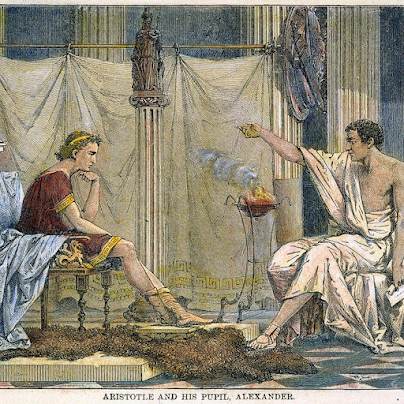
VOCABULARIO ARISTÓTELES

  Algunos   términos importantes   : MONISMO ONTOLÓGICO, Tª HILEMORFICA, MATERIA, FORMA, POTENCIA, ACTO, CAUSA MATERIAL, CAUSA FORMAL, CAUSA...

Datos personales

Blog del Departamento de Filosofía del IES Gabriela Mistral. c/ Miguel de Cervantes, 104. 28939 Arroyomolinos Madrid Tel: 91 689 90 54 Fax: 91 689 77 13.

Páginas